VPN vs Proxy: What's the Difference and When to Use Each?
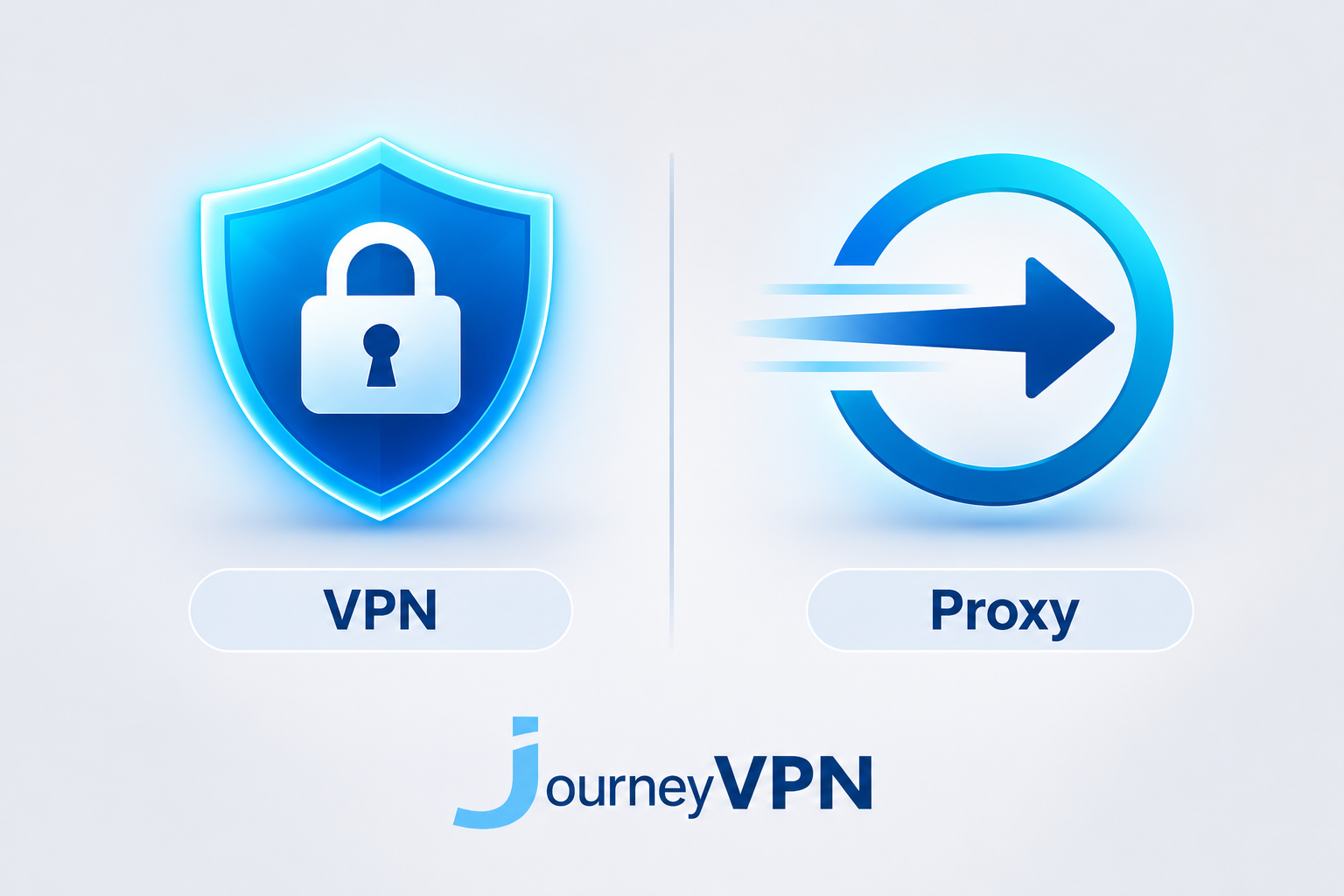
VPN vs Proxy: What You Actually Need to Know
VPNs and proxies both route your internet traffic through an intermediary server — but they work differently, offer different levels of protection, and suit different use cases. Understanding the distinction helps you choose the right tool for the situation.
JourneyVPN includes both a full VPN and a native SOCKS5 proxy, giving you flexibility depending on your needs.
How a VPN Works
A VPN (Virtual Private Network) creates an encrypted tunnel between your device and a VPN server. All traffic from your device — every app, every connection — passes through this tunnel. Your IP address is masked, your traffic is encrypted, and your ISP only sees that you're connected to a VPN.
This system-wide approach is VPN's key advantage: it protects everything, not just specific apps or browsers. Whether you're using a messaging app, checking email, or browsing the web, it's all covered.
How a Proxy Works
A proxy routes your traffic through an intermediary server but typically doesn't encrypt it. It masks your IP address but leaves your data readable to anyone who intercepts it. Proxies are usually configured per-app or per-browser, not system-wide.
SOCKS5 is a type of proxy that handles a broader range of traffic types than HTTP proxies, making it more versatile. JourneyVPN's built-in SOCKS5 proxy is useful when you need routing flexibility without the overhead of a full encrypted tunnel.
When to Use Each
Use a VPN when you need full encryption and system-wide protection — on public WiFi, for sensitive communications, or in restrictive network environments. Use a proxy when you need to route specific traffic through a different IP without the overhead of full VPN encryption, such as for certain app configurations or low-sensitivity tasks.
- VPN: encrypted, system-wide protection for all traffic
- Proxy: lightweight routing for specific apps or use cases
- JourneyVPN: includes both — use what fits your situation
The best tool depends on your threat model. For most privacy use cases, a full VPN is the right choice. JourneyVPN gives you both options built into a single free app — so you're never forced to compromise.